
Understanding parents' experiences of using a portion guide for young children: a qualitative study
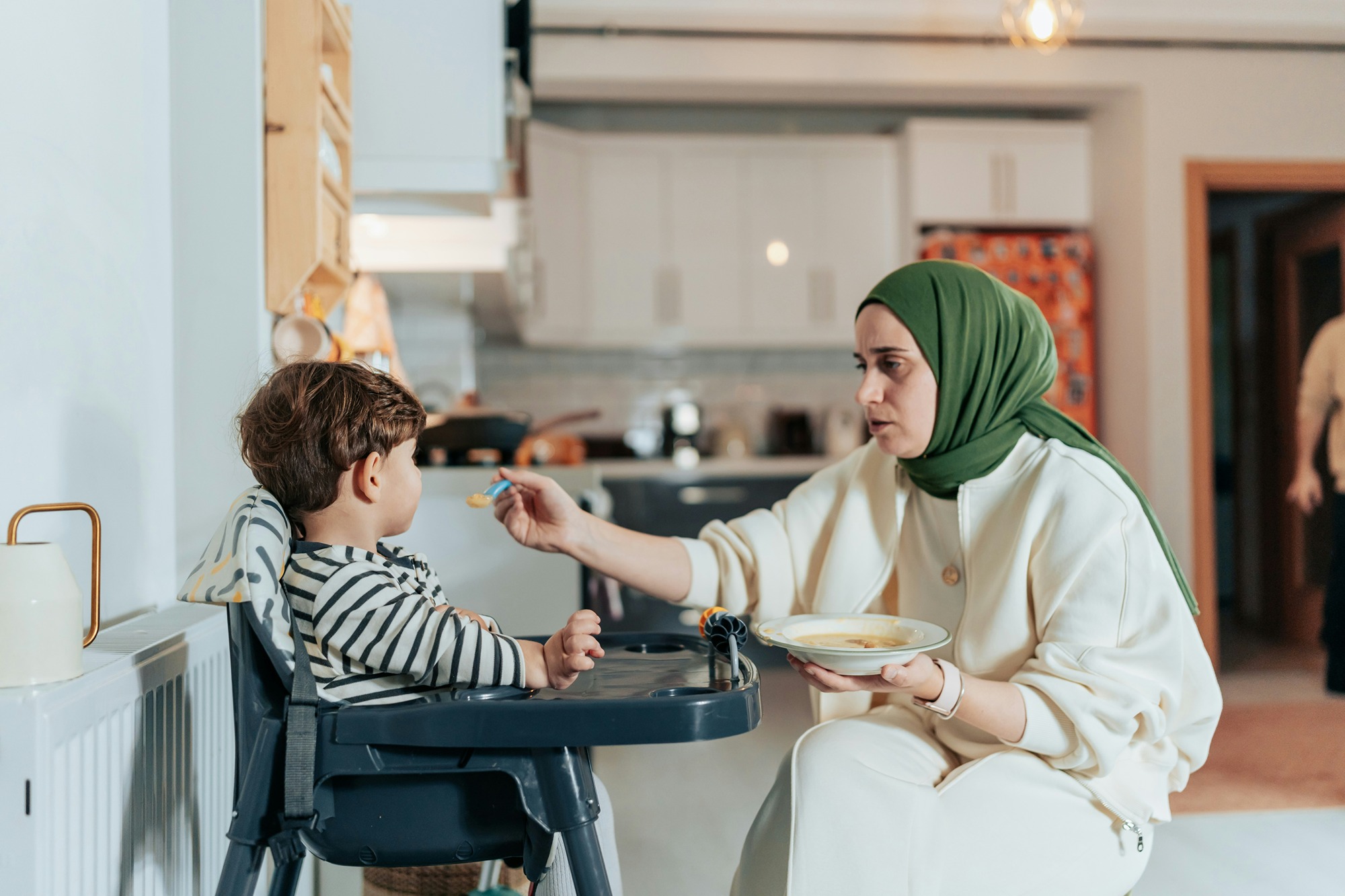
Serving children larger portion sizes is associated with higher energy intake and can contribute to childhood obesity. It has also been found that parents of young children are open to receiving portion guidance. However, the perspective of parents who have received a portion guide is not well understood. That's why Mira Malmber and Rana Conway at University College London and Beckie Lang at HENRY have conducted new qualitative research with the aim of:
(i) understanding how parents provided with an age-appropriate portion guide use it to guide feeding behaviour and
(ii) assessing the value of making age-appropriate portion guidance more widely available.
In-depth interviews were conducted with 15 parents of children (aged 1-4 years) who had received an age-appropriate portion guide. The results raised several key takeaways. The portion guide was seen as a useful resource for maintaining balance in children's diets and limiting less healthy foods; yet, it was not used directly to guide the portions parents served. Some aspects of the guide were seen as impractical and unrealistic, and portions served were largely determined using parent- and child-led strategies.
The results suggest that portion guides might be less useful for parents' portioning practices than previously thought, but that portion guides are still appreciated by parents and positively influence other aspects of feeding behaviour.
To find out more, read the full paper on PubMed
Comments