
How community action can improve the way we eat
Food brings people together. It’s a universal language that everyone understands, helping us connect with each other and ourselves. Food allows people to express cultural identity, values and feelings. It creates a sense of belonging and community.
Across the country, community-based initiatives harness our shared connection with food, from community kitchens and cafes to gardens, food co-ops and cooking classes. Community action can help drive dietary change by turning a personal, often isolating, health journey into a shared social experience.
Food desert
For some people, healthy food is hard to access or unaffordable. A food desert describes a neighbourhood or community that has limited public transport, few supermarkets selling fresh produce and lots of fast-food outlets. This type of food environment is associated with higher rates of obesity, type 2 diabetes and heart disease.[1] Between 2020 and 2025, UK food prices increased by 38.6%, putting considerable strain on household budgets and the cost of healthy diets.[2] In January 2025, over 7 million UK adults faced food insecurity, with many going hungry due to the high cost of food.[3]
Community gardens
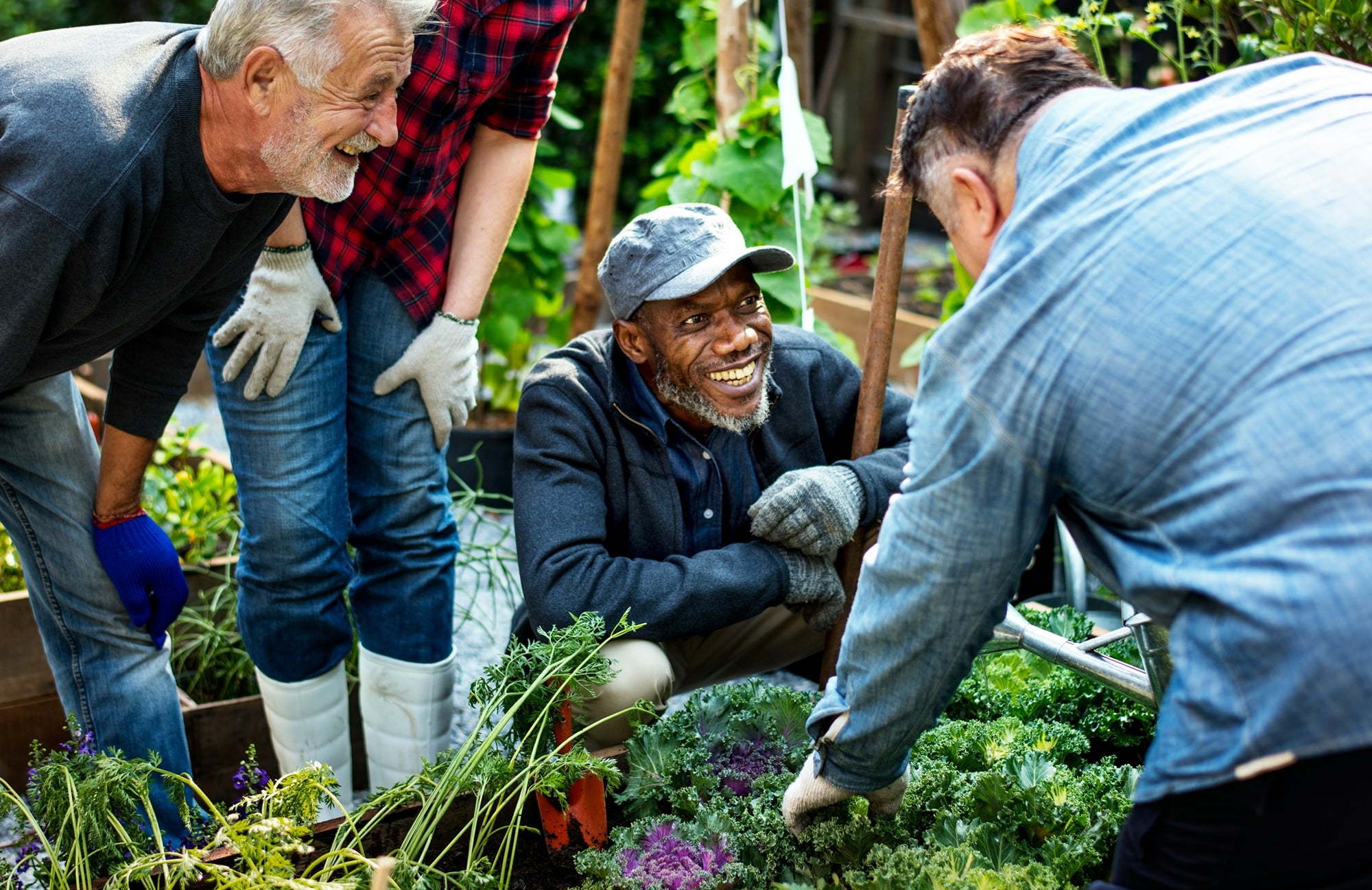
Community gardens play a vital role in combating food insecurity, teaching hands-on skills and helping people build social connections with their neighbours.[4] Locally-grown fruits and vegetables offer residents affordable, fresh and seasonal produce. Any surplus benefits food banks and community kitchens. Gardens serve as outdoor classrooms, teaching participants about growing food, soil health, nutrition and sustainable food production. This empowers individuals with skills and knowledge, building confidence and resilience.
Community kitchens
Community fridges and kitchens provide residents with fresh ingredients and free or low-cost food, reducing food poverty and food waste.[5] As local hubs, they distribute surplus food from allotments or supermarkets, offering participants a choice of foods. This can help increase fruit and vegetable intake and add more variety to people’s diets. Access to fresh food and the sharing of information, such as meal planning, recipes and batch cooking, encourage interest in healthy eating and cooking.
Cooking classes
Cooking classes and workshops run by community kitchens, local charities or non-profit organisations improve diets by building cooking confidence, changing eating habits, reducing dependence on costly ready meals and teaching cooking techniques.[6] Classes can be tailored to meet the needs of specific groups, such as families, migrants, vulnerably housed people and schools. Learning to cook is an essential life skill that empowers individuals to prepare healthy and budget-friendly meals.
Food co-op
A food co-op is a community-led, non-profit organisation owned and run by its members. Co-ops support dietary change by increasing access to affordable, fresh food, especially in underserved communities.[7] Many also offer food-related training and development opportunities tailored to their members’ specific needs. Co-ops promote local food sourcing, and by buying directly from local farms, they can often secure lower prices for nutritious foods, improving food choices for low-income individuals and families while supporting the local food economy.
Peer support
Peer-support interventions held in community venues provide a safe space for learning and sharing experiences. Peer leaders can offer practical skills and emotional support, helping promote healthy eating habits. These trained individuals bring relatable lived experience and provide customised education, including demonstrations on cooking healthy meals, utilising local produce and helping with planning and budgeting. As childhood dietary habits tend to carry into adulthood, it is important for young people to understand the benefits of a balanced diet so they can make informed decisions. Peer-led groups help build trust, improve nutrition knowledge and increase self-efficacy, which help promote and sustain lasting behaviour change.[8]
Community messaging
Big brands dominate advertising and frequently promote unhealthy food and drinks. Research shows that food advertising has a particularly strong influence on children and has established direct links between advertised brands of energy-dense products, especially those high in fat, salt and sugar, and obesity.[9] Community-led action builds resilience against aggressive food marketing by promoting media literacy, restricting advertising platforms (such as digital billboards) and improving the use of public space in ways that benefit the community. Rather than serving as an advertising space for fast food, it can be transformed into a platform for community art, ethical messaging advocating for a greener, more compassionate food system and the promotion of local events.
Conclusion
Group-based change is powerful. Community initiatives provide shared goals, peer support and social accountability. Studies demonstrate the positive benefits of community-focused food interventions for both adults and children across age groups.[8,10,11] When individuals develop a sense of responsibility and ownership, changes become more deeply embedded and collective motivation is strengthened, leading to long-term benefits for individuals, families and the wider community. Given the structural barriers that significantly affect diet, community empowerment remains a vital approach to improving dietary health.

Founder of Target Editorial, Nicola Deschamps ANutr collaborates with international publishers, food and beverage companies and third-sector organisations, providing customised print and digital content focused on nutrition, health and well-being.
Nicola Deschamps ANutr
References:
Johnstone AM, Lonnie M. Tackling diet inequalities in the UK food system: is food insecurity driving the obesity epidemic? (The FIO Food project). Proceedings of the Nutrition Society. 2024;83(3):133-141. doi:10.1017/S0029665123004871
Harari D (2026) The impact of food inflation on the cost of living. (Research Briefing 96001). London: House of Commons Library. Available at: https://commonslibrary.parliament.uk/research-briefings/cdp-2026-0004/
The Food Foundation (2025) Latest food insecurity tracker shows seven million adults going hungry. Available at: https://foodfoundation.org.uk/news/latest-food-insecurity-tracker-shows-seven-million-adults-going-hungry
Huq FF, Deacon L. A systematic review of community gardens and their role in urban food security and resilience. Discover Sustainability. 2025;6(1) doi: https://doi.org/10.1007/s43621-025-01628-5
Iacovou M, Pattieson DC, Truby H, Palermo C. Social health and nutrition impacts of community kitchens: a systematic review. Public Health Nutr. 2013;16(3):535-543 doi:10.1017/S1368980012002753
Rees J, Fu SC, Lo J, et al. How a 7-Week Food Literacy Cooking Program Affects Cooking Confidence and Mental Health: Findings of a Quasi-Experimental Controlled Intervention Trial. Front. Nutr. 2022. 9:802940. doi: 10.3389/fnut.2022.802940
Kent K, Brooks C, Tuki Attuquayefio, et al. Participation in a community-based food cooperative impacts self-reported food security status and dietary intake in Australian adults. Appetite. Published online April 1, 2025.108030-108030. doi: https://doi.org/10.1016/j.appet.2025.108030
Ekubagewargies DT, Ahmed F, Lee P. Effectiveness of Peer-Led Interventions in Improving the Dietary Behavior of Adolescents in Low- and Middle-Income Countries: A Systematic Review. Nutrition Reviews. 2025.83(7) doi: https://doi.org/10.1093/nutrit/nuaf037
Coleman PC, Hanson P, van Rens T, Oyebode O. A rapid review of the evidence for children’s TV and online advertisement restrictions to fight obesity. Preventive Medicine Reports. 2022;26(26):101717. doi: https://doi.org/10.1016/j.pmedr.2022.101717
Jeff P, Benzimra A, Murphy JL, Fenge LA, Devis-Rozental C, Amenyah SD. Impact of Community-Based Food Interventions on Health, Well-being, and Social Connectedness of Older Adults: A Scoping Review. Health Soc Care Community. 2025.1:6677936. Published 2025 Oct 25. doi:10.1155/hsc/6677936
Orr J, McCamley A. Evaluating the effectiveness of a community-based dietary intervention in Nottingham. British Food Journal. 2017.119(5):1091-1101. doi: https://doi.org/10.1108/bfj-09-2016-0444
Comments