
Does carbohydrate counting still have a role in type 1 diabetes care?
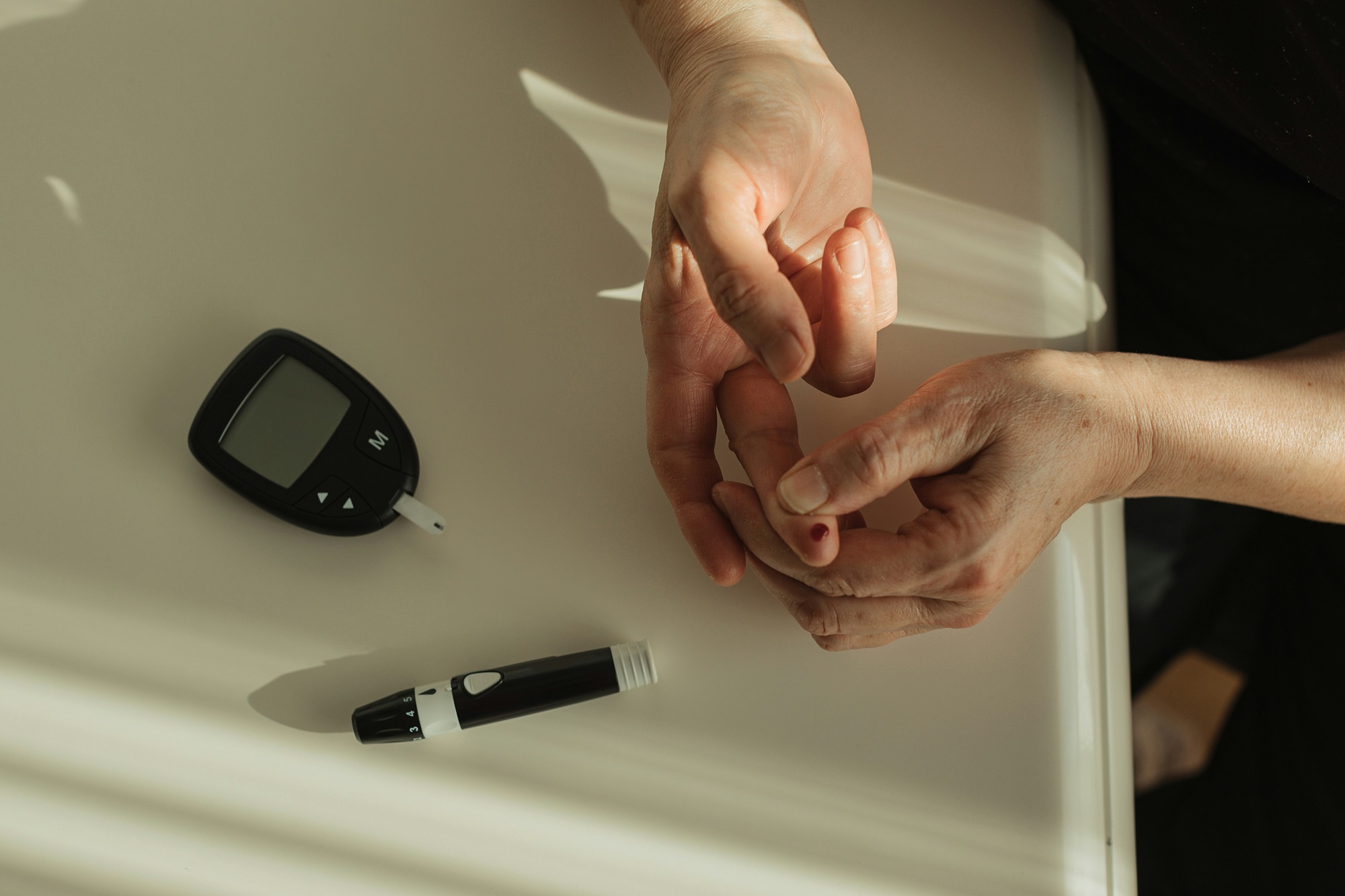
Type 1 diabetes (T1D) is an autoimmune condition in which insulin-producing beta-cells in the pancreas are destroyed, leading to insulin deficiency.[1] Insulin therapy substitutes for the lack of endogenous insulin; this is critical to regulate blood glucose and prevent acute complications, such as the perilously high blood glucose levels seen in diabetic ketoacidosis.[1]
Insulin regimens have conventionally been based on basal and bolus dosing; the basal dose mimics background endogenous insulin secretion, while the bolus dose substitutes for insulin release during mealtime glucose excursions or fluctuations.
Mealtime dosing using carbohydrate counting
Newly-diagnosed patients with T1D are referred onto the Dose Adjustment for Normal Eating (DAFNE) course.[2] DAFNE primarily delivers training on carbohydrate counting, educates about the effect of macronutrients on blood glucose and supports with accurate prandial (mealtime) insulin dose estimation.
The mealtime dose is intended to pre-empt post-eating glucose excursions. Carbohydrates are the main drivers of postprandial glycaemia and counting carbs is a common practice used to estimate the amount of carbohydrate ingested in a meal.[3]
The insulin-to-carbohydrate ratio (ICR) estimates the number of grams of carbohydrate covered by one unit of rapid-acting insulin.[3] Using this ratio and the carbohydrate count, the patient can calculate the number of insulin units to be administered pre-prandial for any given meal.
Mealtime dosing can also factor in counts of fat and protein intake for enhanced insulin precision, since they contribute to delayed and prolonged postprandial glycaemia.[4] Correction factors may also be used to calculate the amount of insulin needed to bring blood glucose down to a normal level.[3]
Example
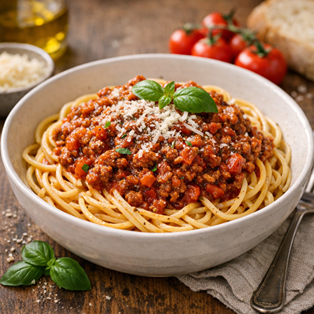
A medium serving of spaghetti bolognese made with 5% lean minced beef, dry white spaghetti, tinned tomatoes, half an onion and a teaspoon of olive oil, contains approximately 70g of carbohydrate, 35g of protein and 12g of fat (Pic 1). If the ICR is 1:10, this means 1 unit of rapid-acting insulin covers 10g of carbohydrate. There are 70g of carbohydrate in the meal, so 70 divided by 10 gives an insulin dose of 7 units.
Innovations in insulin delivery
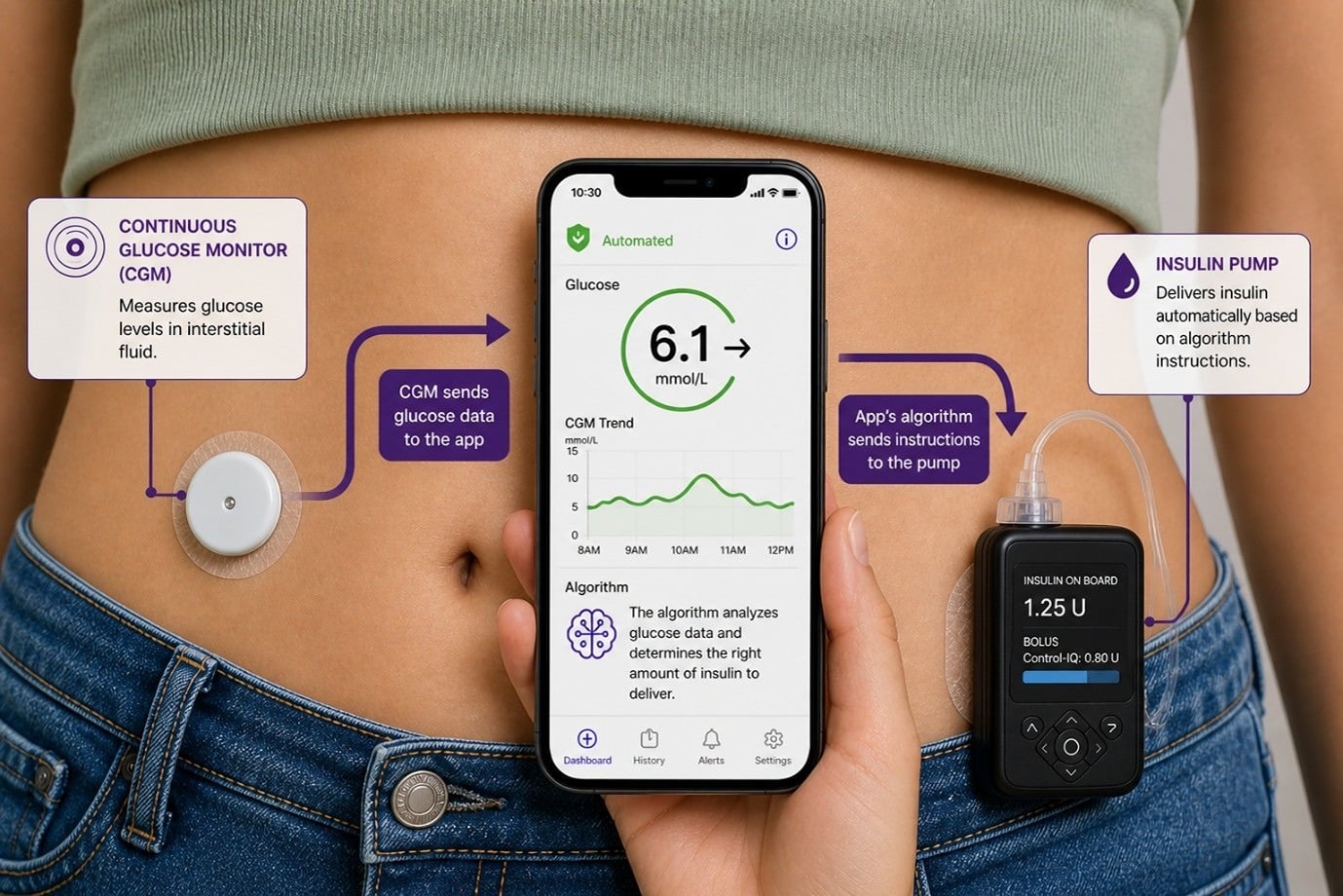
Both the mode of insulin delivery and formulation have undergone multiple innovations since the discovery of insulin in 1921,[6] alongside concurrent advancements in glucose monitoring technologies. The latest technology involves the use of automated insulin delivery (AID) systems, which automate and adjust insulin delivery based on real-time glucose data.[7]
A continuous glucose monitor (CGM) is figuratively ‘linked’ to an insulin pump via an algorithm on a mobile phone app (app) (Pic 2). AID systems can reduce the user burden of manually checking blood glucose and self-administering insulin based on readings.
Carbohydrates in automated systems – to count or not to count?
Given that AID systems automate insulin delivery based on CGM data, it prompts the question of whether there is still a role for carbohydrate counting. The answer depends on which type of AID system is used; while they all automate basal insulin delivery, they differ in the extent to which prandial and correction bolus insulin are automated.
Users of the hybrid closed loop (HCL) system need to input the carbohydrate count into the bolus advisor (on the phone app) around 10 to 15 minutes before eating.[3] This pre-empts the system so it knows how much insulin the user needs, essentially producing a higher time-in-range (a measure of short-term glycaemic control). A late bolus may deliver too much insulin and increase the risk of hypoglycaemia. Correction boluses can be self-administered to treat hyperglycaemia.[3]
The advanced hybrid closed loop system still requires carbohydrate input; however, it delivers automatic correction boluses without user input.[7]
The fully closed loop (FCL) system does not require carbohydrate counting or pre-meal bolus dosing. It enables automated insulin bolus release upon detection of prandial glucose excursions.[9]

Users of HCL and AHCL systems still need to estimate the carbohydrate content of meals, demonstrating how diabetes management is effective when automation is coupled with informed user input. Data indicates hybrid closed loop systems can improve short‑term glycaemic control; a 2026 meta-analysis reported that they significantly reduced glucose levels by 0.11 mmol/L relative to sensor-augmented pumps.[10]
Yet, widespread implementation of HCL systems is constrained by factors such as cost and maintenance. Currently, in the UK, this technology is available on the NHS to only certain groups with T1D, including children and young people under the age of 18.[11]
At the other end of the spectrum, fully closed loop systems enable complete automation, which can alleviate the daily burden of diabetes management, especially for populations who may find carb counting to be arduous and challenging.[9]
However, it is important to bear in mind that greater automation may inadvertently lead to an over‑reliance on technology. Fully closed loop systems cannot anticipate meals through user-announcement of carbohydrate intake, resulting in reactive rather than proactive insulin delivery. Delays in glucose sensing and subcutaneous insulin pharmacokinetics have been reported to lead to erratic post-meal glycaemia.[7,12] This is a significant limitation.
Also, patient safety may be compromised if the technology malfunctions or if internet connectivity drops. Under these circumstances, the ability to estimate insulin requirements based on macronutrient intake, while minimising the risk of hypoglycaemia, remains a vital and potentially life-saving skill.
Conclusion
Automated insulin delivery systems offer clear benefits, including improved quality of life, reduced apprehension associated with accurate dosing and greater flexibility around meals and daily activities. Yet, patient involvement remains the cornerstone of effective management of T1D, especially with prandial dosing. This reinforces the continued need for education to ensure patients feel competent and confident in administering mealtime insulin accurately and safely. Automated insulin delivery should complement, rather than replace, user input. Hence, carbohydrate counting and other meal announcement methods continue to play a vital role in diabetes management.

Charlotte Golshetti is a final-year MSc Dietetics and Leadership (pre-registration) student at Coventry University. She has a particular interest in oncology, haematology and nutrition support.
Charlotte Golshetti, MSc Dietetics and Leadership
References
Mazzotta FA, Paoli LL, Rizzi A, et al. Unmet needs in the treatment of type 1 diabetes: why is it so difficult to achieve an improvement in metabolic control? Nutrition and Diabetes. 2024;14(1). doi:https://doi.org/10.1038/s41387-024-00319-w
NICE. Quality Statement 1: Structured Education Programmes | Type 1 Diabetes in Adults | Quality Standards | NICE. www.nice.org.uk. Published 2023. https://www.nice.org.uk/guidance/qs208/chapter/Quality-statement-1-Structured-education-programmes
Managing mealtimes using your hybrid closed loop system (HCL) : University College London Hospitals NHS Foundation Trust. University College London Hospitals NHS Foundation Trust. Published 2024. https://www.uclh.nhs.uk/patients-and-visitors/patient-information-pages/managing-mealtimes-using-your-hybrid-closed-loop-system
Jacobs PG, Levy CJ, Brown SA, et al. Research Gaps, Challenges, and Opportunities in Automated Insulin Delivery Systems. Journal of Diabetes Science and Technology. 2025;19(4):937-949. doi:https://doi.org/10.1177/19322968251338754
AI Generated Image
Vecchio I, Tornali C, Bragazzi NL, Martini M. The Discovery of Insulin: an Important Milestone in the History of Medicine. Frontiers in Endocrinology. 2018;9(613). doi:https://doi.org/10.3389/fendo.2018.00613
Templer S. Closed-Loop Insulin Delivery Systems: Past, Present, and Future Directions. Frontiers in Endocrinology. 2022;13(1). doi:https://doi.org/10.3389/fendo.2022.919942
AI Generated Image
Rama Lakshman, Hartnell S, Ware J, et al. Lived Experience of Fully Closed-Loop Insulin Delivery in Adults with Type 1 Diabetes. Diabetes technology & therapeutics. Published online February 28, 2024. doi:https://doi.org/10.1089/dia.2023.0394
Sidki AS, Highton PJ, O’Mahoney LL, Wilkinson TJ. Hybrid closed‐loop insulin delivery improves glycaemic control compared with sensor‐augmented pump therapy: A meta‐analysis of “free‐living” randomised trials in type 1 diabetes. Diabetic Medicine. 2026;43(3). doi:https://doi.org/10.1111/dme.70210
England N. NHS England» Hybrid closed loop technologies: 5-year implementation strategy. www.england.nhs.uk. Published January 22, 2024. https://www.england.nhs.uk/long-read/hybrid-closed-loop-technologies-5-year-implementation-strategy/
Åm MK, Teigen IA, Riaz M, Fougner AL, Christiansen SC, Carlsen SM. The artificial pancreas: two alternative approaches to achieve a fully closed-loop system with optimal glucose control. Journal of endocrinological investigation. Published online September 15, 2023. doi:https://doi.org/10.1007/s40618-023-02193-2
Comments