
Make hunger history: the Right to Food UK Commission needs your evidence

Right to Food London has aligned with the Right To Food UK Parliamentary Commission. The aim is to compile a report of evidence by September 2026, to present to the government to advocate for the recognition of the human right to food in legislation, so we can end hunger by 2035.[1]
The commission is currently holding assemblies around the UK to gather evidence from communities and health professionals on the scale and scope of food insecurity throughout the UK – and we would love to hear from NHD readers.
Hunger is a political choice
A recognition to the Right to Food in the UK would guarantee dignified access to adequate, healthy and affordable food for all. Food insecurity can result from insufficient finances, limited access to food or an inability to prepare healthy meals, which may be caused by a financial or personal crisis.[2]
The launch of the Right To Food UK Commission represents a significant step towards a roadmap to implement the right to food law in the UK.
The five demands of the Right To Food campaign
Universal free school meals for all children
Transparency on food costs in wages and benefits
Independent enforcement – create a regulatory body to ensure government accountability
Community kitchens – fund community dining and meal programmes
Ensure food security – integrate food security into all policy areas
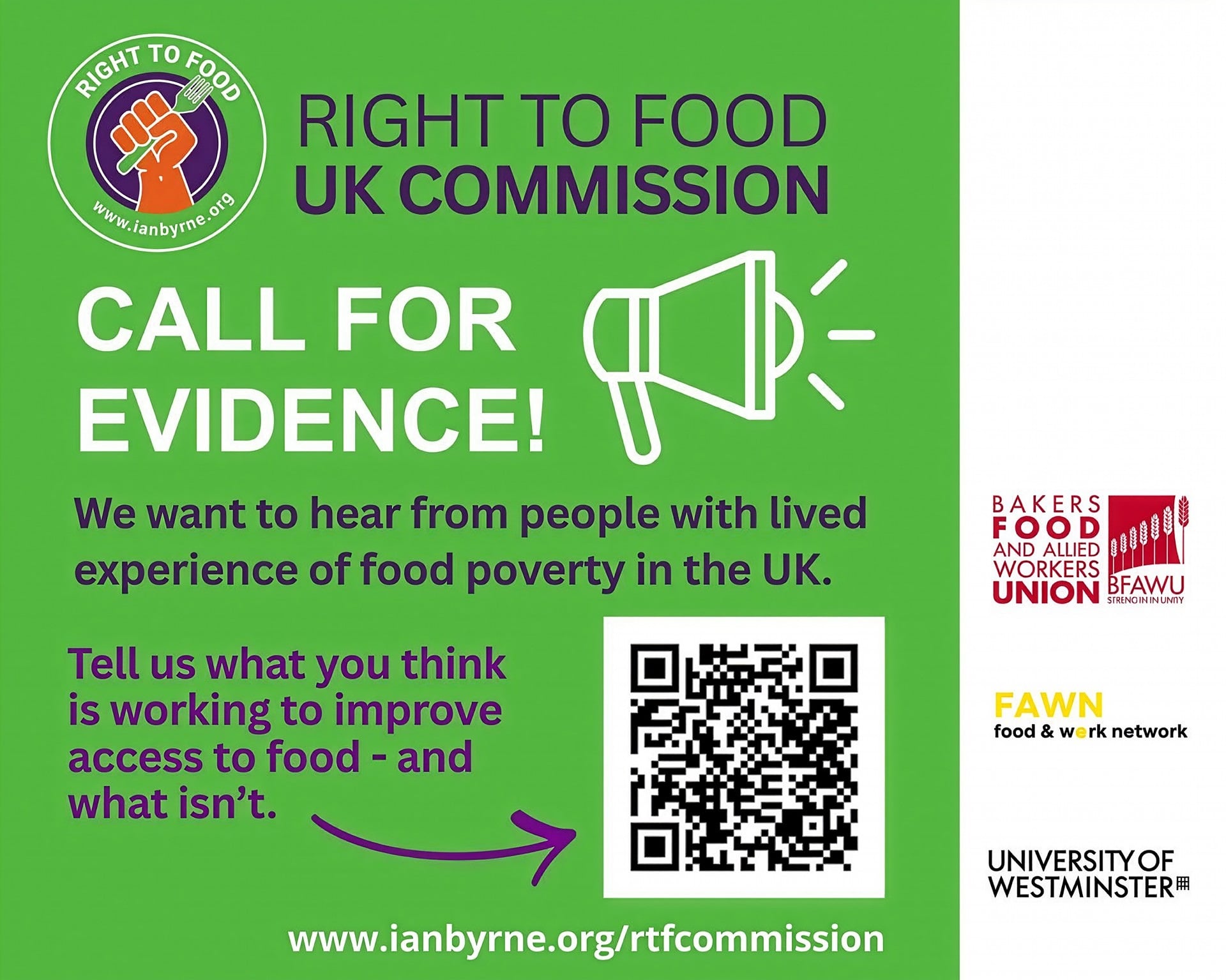
We need your evidence
The Right to Food Commission’s work intersects with BDA campaigns such as Extending free school meal provision to all primary school children and the Development of a comprehensive UK Food Strategy.
A statutory right to food could therefore strengthen mechanisms within other specialist group projects, promoting opportunities for the future of nutritional professions, including those in clinical facing roles aligning with government strategies such as the creation of a Neighbourhood Health Service.[1,3]
The commission held its first evidence session in Liverpool in January 2026, and will be followed by sessions in Belfast, Newcastle, Glasgow, Cardiff and London. Each session will be preceded by a community meeting to hear community voices of lived experience, that the commission will contextualise:
The extent and nature of food insecurity
The effects of malnutrition and food insecurity on public health outcomes
The impact of current labour market conditions, welfare provision, and asylum/immigration policy as drivers of food insecurity
The role of public policy frameworks in tackling food insecurity
How to ensure support and investment for collective community-based food initiatives
How to legislate for an effective and enforceable statutory Right to Food
The Right To Food UK Commission represents a key moment for embedding human rights principles into UK food and nutrition policy – and it's one that we should all be part of.
To submit evidence the commission may find useful and to raise this issue to local councillors and MPs, visit:
References
Department of Health and Social Care. Policy paper. 10 Year Health Plan for England: fit for the future. Available: https://www.gov.uk/government/publications/10-year-health-plan-for-england-fit-for-the-future Accessed February 2026
Sustain. Food Poverty. Available: https://www.sustainweb.org/foodpoverty Accessed February 2026.
Kundra A, Batool H, Moore S et al. Supporting those experiencing food insecurity: A scoping review of the role of a dietitian. Journal of Human Nutrition and Dietetics. 2024. 38(1). https://doi.org/10.1111/jhn.13407

Abigail Pearson RD
Senior Specialist Dietitian and a Project Manager for the Right To Food London
Comments